
Construction and demolition debris rules on Oahu: what to know before you haul
By Nadia Ferraro · Updated 2026-07-18
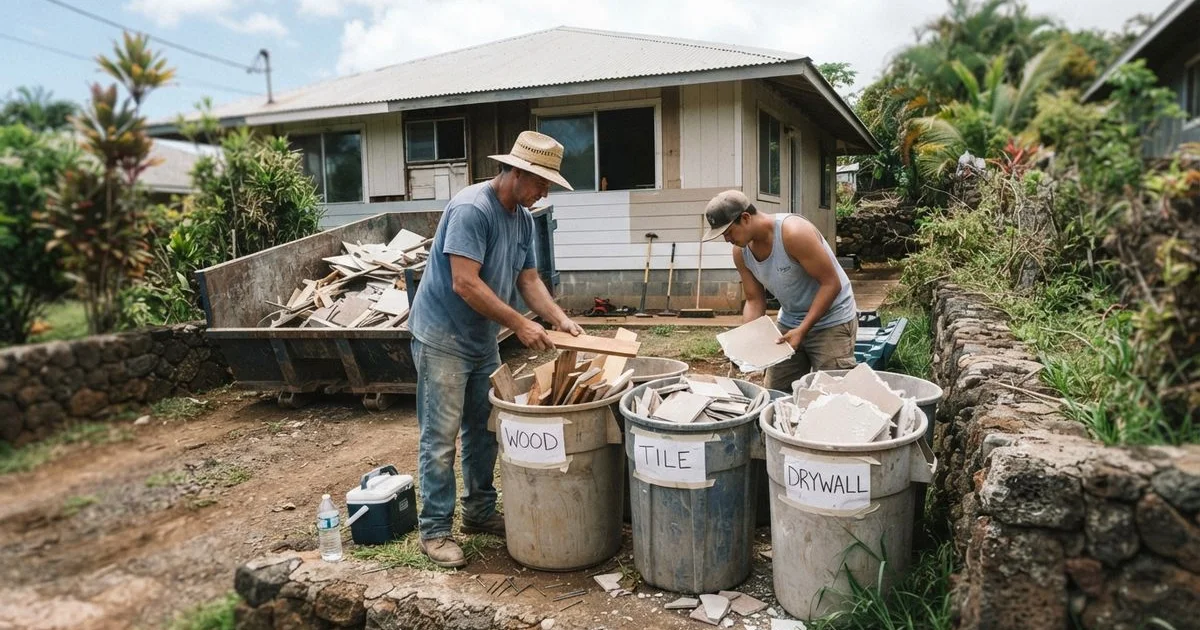
A kitchen remodel or a demolition project generates a different kind of waste than a typical household cleanout, and Oahu treats it differently too. Knowing where the real rules and risks sit helps you plan a renovation or teardown without a debris removal surprise partway through.
This guide provides general information, not legal or contracting advice. For project-specific permitting questions, confirm directly with the City and County of Honolulu or a licensed contractor.
Why construction debris is handled separately
Materials like broken concrete, drywall, lumber, roofing shingles, tile, and structural rubble are denser and heavier than general household junk, and they often need to go to specialized recycling or aggregate facilities rather than a standard waste stream. This is part of why most construction debris removal providers quote this work separately from a general junk pickup, even when both categories technically involve hauling something away.
Hawaii’s limited landfill capacity makes this distinction matter more than it might in a larger mainland market. Sorting concrete, metal, and wood for recycling or specific disposal routes is not just a nice-to-have here, it is a meaningful factor in how the islands manage waste at all.
Permits: usually about the work, not the debris
Hauling debris away generally does not require its own permit. What can require a permit is the underlying work itself: structural demolition, significant renovation, or dumpster placement on a public street. If your project falls into any of these categories, check with the city or your contractor about permitting separately from getting a debris removal quote, since the two are related but distinct questions. For the broader legal picture beyond permits, the guide to junk removal laws and permits in Hawaii covers illegal dumping enforcement and licensing requirements.
Contamination concerns in older buildings
Homes built before the 1980s carry a real possibility of lead-based paint or asbestos-containing materials in things like old tile, insulation, or certain building materials. This is not a minor technicality. Standard junk removal and construction debris crews are generally not licensed or equipped to handle suspected asbestos or lead paint removal, and attempting it without proper precautions poses genuine health risk.
If your renovation involves a pre-1980s structure, it is worth having a professional assessment done before demolition begins, rather than assuming a standard hauling crew can handle whatever turns up. This is a case where cutting a corner has real consequences, not just an inconvenience.
What drives pricing and why some haulers say no
| Factor | Why it matters |
|---|---|
| Weight and density | Concrete, tile, and roofing material cost more to dump by weight |
| Volume | Large-scale renovation or teardown debris often needs a dumpster rather than a truck visit |
| Contamination risk | Suspected asbestos or lead paint requires a specialized, licensed contractor |
| Recycling requirements | Hawaii’s landfill constraints make sorting more relevant here than elsewhere |
| Specialization | Some companies focus on one category (household or construction) rather than both |
Getting the right provider for the job
Ask directly whether a provider specializes in construction debris or handles it as a secondary service, since the equipment and disposal relationships needed for concrete and heavy rubble differ from general junk hauling. Confirm what materials they will not take, since a clear answer here is a good sign, and ask how they route debris: straight to landfill, or split between recycling, aggregate facilities, and disposal.
For a renovation project generating debris over multiple phases, ask whether the provider can schedule regular pickups, weekly or at the end of each major phase, so debris does not accumulate and block access to the site while work is ongoing.
Coordinating with your contractor
If you are working with a general contractor, it is worth clarifying early on whether debris removal is part of their scope or something you are arranging separately. Some contracts bundle disposal into the overall project cost, while others leave it to the homeowner to book. Getting this straight before work starts avoids a situation where debris piles up on site because both sides assumed the other was handling it.
It also helps to walk the site with whoever is hauling debris before major demolition begins, especially if the project touches multiple material types, framing lumber in one area, tile and concrete in another. A provider that understands the full scope upfront can plan equipment and scheduling more accurately than one working off a verbal description of a multi-phase job.
For more on how we evaluate construction debris providers on equipment fit and pricing transparency, see our methodology, or visit the home page to compare other categories across Oahu.
FAQ
- Can construction debris go in a regular junk removal load?
- Some smaller amounts can, but most crews price and route it separately, since it is heavier and often needs specific disposal facilities that differ from general household trash routes.
- Do I need a permit to dispose of renovation debris?
- Not for hauling itself, but the underlying construction or demolition work may require a city permit depending on scope. Confirm this with your contractor or the city separately from your debris removal quote.
- What about older homes with potential lead paint or asbestos?
- This is a genuine concern for pre-1980s materials. Standard junk removal crews generally are not equipped or licensed to handle suspected asbestos or lead-based materials, and those require a specialized contractor instead.
- Why do some haulers refuse construction debris entirely?
- Weight, volume, and disposal cost are the main reasons. Concrete and heavy rubble require different equipment and cost more to dump than general junk, so some companies choose to specialize in one or the other rather than both.