Is it safe to remove your own e-waste, chemicals, and hazardous junk in Hawaii
By Nadia Ferraro · Updated 2026-07-14
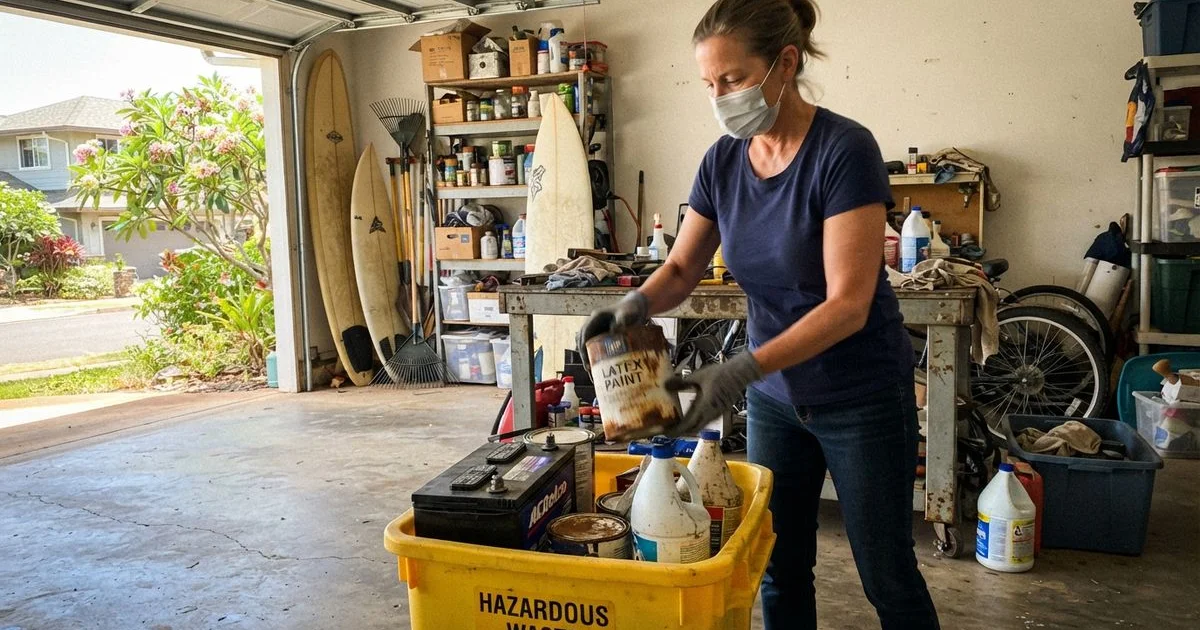
Clearing out a garage or storage area often turns up more than furniture and boxes: old electronics, half-used cans of paint, batteries, maybe an old air conditioner. Some of this is perfectly fine to handle yourself. Some of it genuinely is not, and Hawaii’s rules around it are stricter than people expect.
This guide is general safety information, not a substitute for professional hazardous material handling advice. When in doubt about a specific item, contact a certified disposal facility directly.
Why electronics are treated differently
Old televisions, computer monitors, and similar electronics contain materials like lead, mercury, and cadmium that Hawaii restricts from landfill disposal. This is not a minor technicality, on an island with limited freshwater reserves and constrained waste capacity, these substances leaching into soil or groundwater is a real environmental concern, not a hypothetical one.
Handling this yourself generally means finding a certified electronics recycler rather than putting items in regular trash. This is manageable to do on your own for a few items, but it does add a step that a standard junk pickup or municipal trash service will not handle for you.
The refrigerant problem
Refrigerators, freezers, and window or central air conditioning units contain refrigerant that federal law requires a certified technician to extract before the unit can be scrapped or recycled. This is not something to attempt yourself. Releasing refrigerant is both illegal and a genuine environmental hazard, and the equipment needed to do it safely is specialized, not something available to a typical homeowner.
If your cleanout includes one of these appliances, this is a clear case for a professional eco-friendly disposal and donation provider or a company equipped to handle refrigerant reclamation as part of the job, rather than trying to work around it yourself.
Chemicals and household hazardous waste
Old paint, solvents, pesticides, and similar chemical products fall under household hazardous waste and generally need to go to a designated collection event or facility rather than the trash or a standard junk pickup. Many junk removal companies will explicitly decline to haul these items for the same underlying reasons you should not put them in a regular bin: improper disposal creates real environmental and safety risk.
A quick safety reference
| Item type | Safe to handle yourself | What is actually needed |
|---|---|---|
| General furniture, boxes, clutter | Yes | Standard disposal or a regular pickup |
| Appliances without refrigerant | Yes, with normal lifting care | Standard removal |
| Televisions, monitors, electronics | Limited | Certified e-waste recycler |
| Refrigerators, freezers, AC units | No | Certified refrigerant reclamation |
| Paint, solvents, chemicals, batteries | No | Household hazardous waste facility |
Making the call on your own cleanout
If your project is mostly furniture, boxes, and general clutter, doing it yourself and dropping items at a convenience center is a reasonable, safe option. Once electronics, refrigerant-bearing appliances, or chemical products are involved, the safest and often the only legal path is routing those specific items through the right channel, whether that is a certified recycler, a hazardous waste event, or a professional hauler equipped to handle them correctly.
Mixing the two approaches works well in practice: handle the straightforward items yourself, and let a professional crew take the specific pieces that need certified handling. This keeps cost down without taking on risk that is not worth the savings. Hazardous materials come up often in severe cleanouts too; the guide to hoarding cleanup health and safety covers the broader precautions professionals take in those situations.
A note on batteries and small electronics
Household batteries, including the rechargeable kind found in old phones, laptops, and power tools, deserve a specific mention. They can pose a fire risk if damaged or improperly stored, and Hawaii treats many battery types as restricted from regular trash for that reason. Small electronics with built-in batteries fall into the same category as larger e-waste items: they need a certified recycler rather than a standard trash bin, even though they are easy to overlook in a box of miscellaneous cords and gadgets.
If you are unsure whether a specific item counts as hazardous, the safest default is to ask before disposing of it, either the facility you plan to use or the junk removal provider you are considering. A quick phone call is a small amount of effort compared to the risk of releasing something toxic into a landfill that was never designed to contain it.
For more on how we evaluate providers on proper disposal practices, see our methodology, or visit the home page to browse other categories this directory covers.
FAQ
- Can I just throw old electronics in the regular trash in Hawaii?
- No. Hawaii restricts many electronics, including televisions and computer monitors, from landfill disposal because of the toxic materials they contain. They need to go through a certified recycler instead.
- Is it safe to remove a refrigerator or AC unit myself?
- Not without professional refrigerant handling. Federal law requires a certified technician to reclaim the refrigerant before the unit can be legally scrapped or recycled, and attempting this yourself risks both safety and legal exposure.
- What about old paint cans and household chemicals?
- These typically need to go to a household hazardous waste collection event or facility rather than regular trash or a standard junk pickup, since many haulers will not take them for the same reasons you should not put them in a landfill bin.
- What is actually safe to handle myself?
- General furniture, appliances without refrigerant, and typical household clutter are fine to move and dispose of yourself if you can do so safely. The risk concentrates specifically around electronics, refrigerant-bearing appliances, and chemical products.