
Health and safety risks of hoarding cleanups and how professionals handle them
By Nadia Ferraro · Updated 2026-07-13
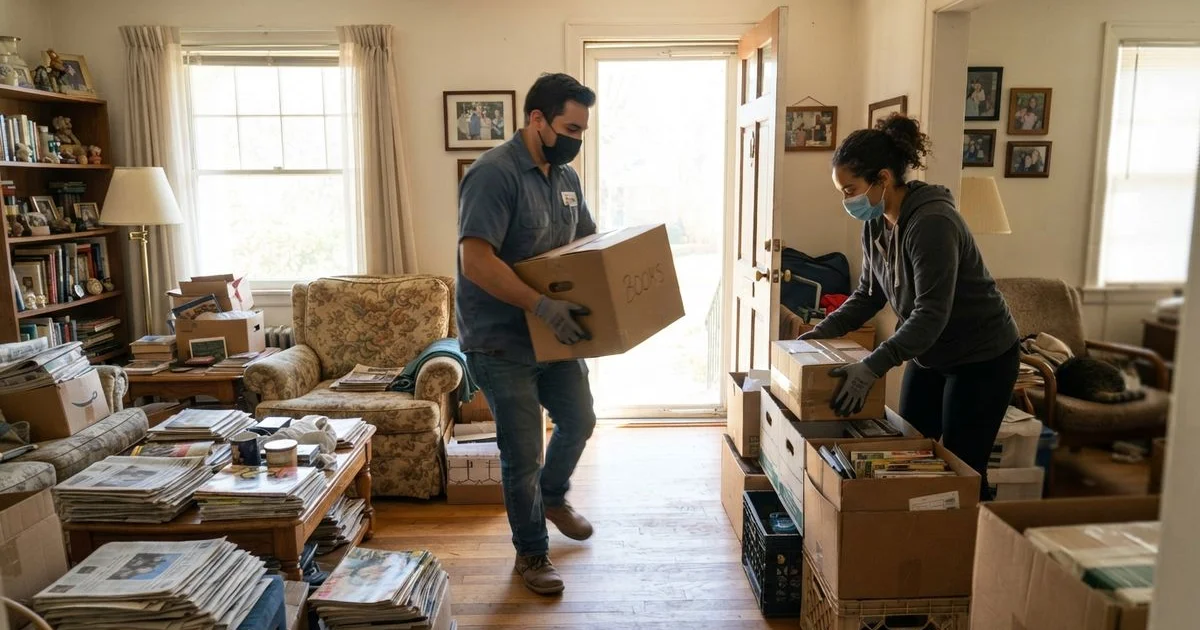
Hoarding cleanups carry real health and safety risks that a standard junk removal job simply does not, and recognizing the difference matters both for anyone considering doing it themselves and for judging whether a provider is actually equipped for the work.
This guide provides general information, not medical advice. If a property involves suspected mold, pest infestation, or biological hazards, consult a licensed remediation professional before deciding on next steps.
The hazards that make this different
Severe clutter accumulation creates risks that are easy to underestimate from the outside. Structural hazards are common: floors can be weakened by weight over years, and blocked exits create real danger in an emergency. Air quality is another concern, mold, dust, and in some cases pest droppings can build up in ways that affect breathing, particularly for anyone with respiratory sensitivities.
Pest infestation is a realistic possibility in long-neglected spaces, and biological contamination, while less common, does occur in the most severe cases. None of these are risks a general cleanup effort, family members working through a weekend, is well equipped to manage safely.
How professionals scope the severity
Providers working in this space often use a hoarding level scale to describe severity, ranging from mild clutter that is mostly a cosmetic and organizational issue, to severe cases involving structural damage, significant pest activity, or genuinely hazardous conditions. This scoping matters because it determines what kind of crew, equipment, and precautions the job actually needs.
A estate and hoarding cleanout provider handling a moderate to severe case should be doing more than showing up with a truck. Expect protective equipment, gloves, masks or respirators depending on conditions, and a paced approach that accounts for structural or air quality concerns rather than treating it like a standard furniture pickup.
When the job needs a different kind of specialist
Some situations cross a line where general hoarding cleanup is not enough. Biological contamination, bodily fluids, significant mold colonies, or conditions posing a genuine infection risk require licensed biohazard remediation, a distinct, specially regulated service from general cleanup work. If a property involves anything in this category, ask directly whether the provider is licensed for biohazard work or whether they will bring in a specialist for that portion of the job.
A rough severity guide
| Level of accumulation | Typical hazards | What to expect from a crew |
|---|---|---|
| Mild clutter | Mostly cosmetic, limited safety concern | Standard cleanup crew, minimal special equipment |
| Moderate accumulation | Some blocked pathways, dust buildup | Crew works in stages, may use basic protective gear |
| Heavy accumulation | Structural strain possible, air quality concerns | Protective equipment standard, slower paced work |
| Severe hoarding | Blocked exits, possible pest or mold issues | Specialized crew, may need biohazard consult |
What to ask before hiring
Ask a provider directly how they assess severity before quoting, whether they use protective equipment for anything beyond mild cases, and how they handle a situation if pest activity or mold is discovered mid-job. A company willing to answer these questions specifically, rather than giving a generic “we handle everything” response, is generally more trustworthy for a job with real health stakes attached.
Taking care of the people involved
Beyond the physical hazards, hoarding cleanups often involve someone emotionally attached to the space, whether that is the person living there or family members overseeing the process. A crew experienced in this kind of work tends to pace things with some sensitivity to that, rather than rushing through purely as a labor job. That combination, real safety precautions plus a measured approach, is generally what separates an experienced hoarding cleanup provider from a general hauling crew taking on unfamiliar territory. Sorting through a lifetime of belongings after a death in the family carries similar emotional weight; the estate cleanout after a death guide covers how that process typically unfolds.
Why DIY attempts often backfire
Family members sometimes try to tackle a moderate or severe hoarding situation themselves before calling a professional, usually out of a wish to spare a loved one from feeling judged by outside help. The risk is that without the right equipment or an understanding of structural and air quality hazards, well-meaning relatives can end up exposed to the same dangers a professional crew is trained to manage safely. If a room shows signs of significant mold, pest activity, or floor damage from years of weight, it is worth pausing a DIY effort and bringing in an assessment before continuing, even if the plan was to keep the work within the family.
For more on how we evaluate specialized cleanout providers, see our methodology, or visit the home page for other categories this directory covers.
FAQ
- Is it safe to clean out a hoarded home myself?
- For severe cases, generally no, without precautions. Structural hazards, poor air quality, pest infestations, and biological contamination are all realistic risks that a general cleanup effort is not equipped to handle safely.
- What is the hoarding level scale professionals use?
- It is a standardized way of describing severity, from mild clutter to conditions involving structural damage, pest infestation, or blocked exits. Providers use it to scope a job and decide what level of precaution and equipment is needed.
- Do professional crews wear protective equipment for these jobs?
- For moderate to severe cases, yes. This can include gloves, masks or respirators, and protective clothing, particularly when mold, pest activity, or biological hazards are present.
- When does a hoarding situation need biohazard specialists instead of a standard cleanout crew?
- When the property involves bodily fluids, significant mold growth, or conditions posing a genuine infection risk. That work requires licensed biohazard remediation, which is a distinct service from general hoarding cleanup.